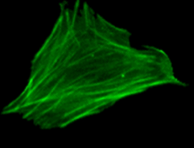
We image thousands of cells and measure morphology through thousands of parameters. We use ANNs and CNNs on the parameters and the images. You can learn more from the talk below.
Cellular Morphomics
We hypothesize that cell shape and cytoskeletal morphology can be used to infer cell state (broadly defined). We have shown that cell morphology can be used to discriminate between different cell states. In fact we can distinguish between cancer cells that differ by a single inserted gene mutation.
These methods will find applications in improving diagnosis and assessing cell health.
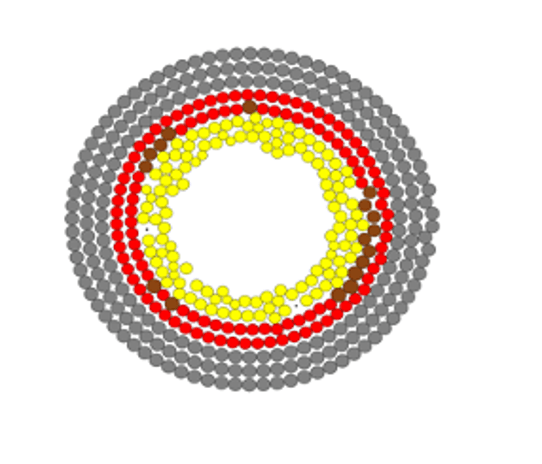
A simple agent-based model of a prostate duct in 2d. Prostate cancers, as well as breast and pancreatic cancers typically form within the ducts of the the respective organ.
Tumor Modeling
We use the agent-based cell modeling platform, PhysiCell, to model the spatial structure in growing tumors. We also study ECM deposition by cancer cells. The goal is to understand the tumor microenvironment as well as to develop computational platforms for personalized medicine.
Stochastic Processes in Biology
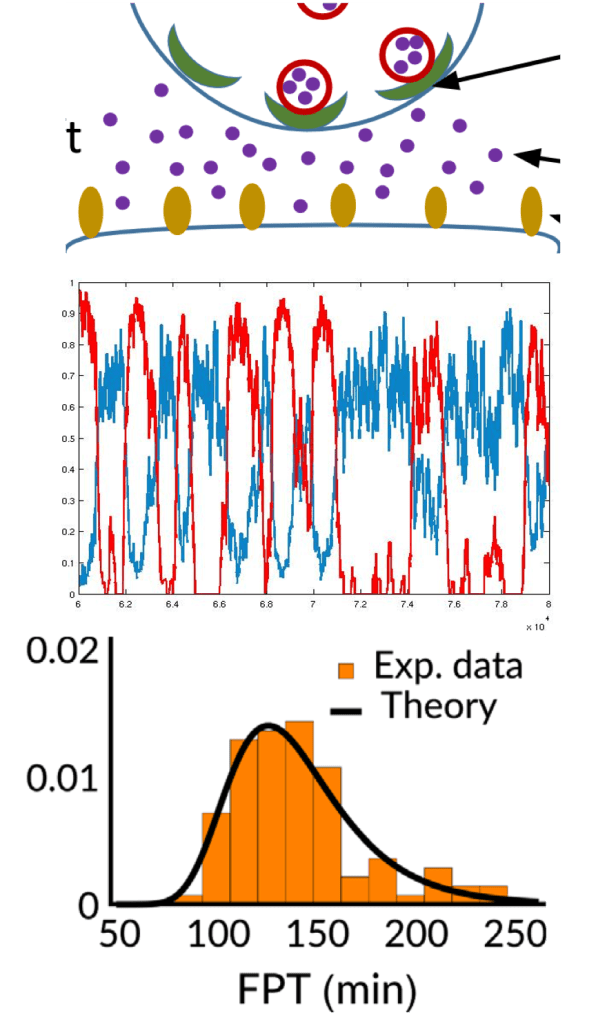
Along with our collaborators Dibyendu Das of IIT Bombay, we have addressed and helped solve several interesting problems involving the application of stochastic processes to Biology. Recent work includes results on first passage times in protein synthesis and a stochastic solution of a synaptic transmission model.

Plant Hormone Signaling
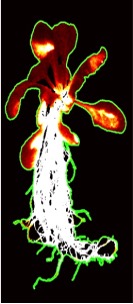
Along with collaborator Cris Argueso we study the plant brain, the interlinked phytohormone network that plants use to process environmental signals and take decisions about flowering, fruit ripening, growth and defense.
Synthetic Biology for Biosensors and Other Applications
We collaborate with Ken Reardon to develop cell-based biosensors for environmental pollutants. We collaborated with June Medford to develop the first genetic toggle switch in plants.

Cancer Systems Biology
We have developed machine learning algorithms to identify markers of drug resistance and sensitivity of cancer cell lines. We are working on modeling the development of prostate cancer and breast cancer.
 Prasad Lab at Colorado State University